
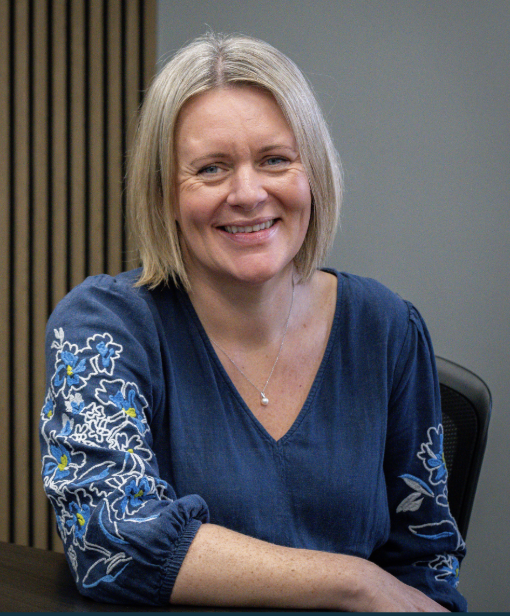
Inside Caecillian’s Finance Function: A Conversation with Finance Director Pamela Sandover
Finance is often seen as a back-office function focused solely on paying invoices and balancing the books. In reality, it plays a far more strategic role in supporting operational performance and guiding business decisions.
Since joining Caecillian in October 2023, shortly after the Management Buy Out, Finance Director Pamela Sandover has focused on strengthening the financial foundations of the business and building a finance function capable of supporting Caecillian’s continued growth.
With nearly two decades of experience as a qualified accountant, Pamela has worked across a variety of industries, including supporting large clients within the distribution sector and most recently working within the education sector at the national exam board AQA. This breadth of experience reflects one of the strengths of the profession.
“As an accountant, the core skills transfer easily between industries,” Pamela explains. “Every organisation needs strong financial controls, clear reporting and reliable data to make good decisions.”
Pamela’s appointment has also brought an important dimension to Caecillian’s leadership team. As the business continues to grow, bringing diverse perspectives into senior roles plays a vital part in strengthening decision-making across the organisation. Different backgrounds and experiences naturally lead to broader viewpoints, encouraging teams to consider challenges from multiple angles and ultimately make more balanced, informed decisions.
Strong leadership is rarely about a single voice. It is about bringing together people who think differently, challenge assumptions and contribute varied perspectives. Pamela’s role within the leadership team reflects Caecillian’s ongoing commitment to building a business where talent, expertise and diversity of thought help shape the future direction of the company.
Building a Stronger Financial Foundation
One of Pamela’s first priorities after joining Caecillian was bringing the company’s accounts production fully in-house. Previously managed externally, this transition has given the business greater visibility over its financial performance and access to more meaningful historical data.
This shift has already strengthened the organisation’s ability to analyse performance, forecast future activity and make informed strategic decisions.
Alongside this work, Pamela has recruited and developed a high-performing finance team and successfully led the company’s first financial audit under the new structure. The audit itself covered two financial years in a single process, requiring extensive preparation, verification and collaboration with external auditors.
“The audit process alone can involve six months of checking, sampling and validation,” Pamela says. “It’s a detailed process but an important one, as it independently verifies the integrity of the company’s financial reporting.”
Looking Ahead: Technology, Growth and the Future of Finance
As Caecillian continues to grow, Pamela’s focus is on ensuring the back-office functions evolve alongside the operational side of the business.
“Growth brings opportunity, but it also brings complexity,” she explains. “It’s important that the systems and processes behind the scenes keep pace with the scale of the business.”
One of the priorities for the coming years is strengthening the wider support infrastructure across the organisation. This includes expanding the scope of the finance function to support additional areas of the business, including fleet, plant and data management. By bringing these elements closer together, the business can improve oversight, maintain strong internal controls and ensure operational teams have the information they need to perform effectively.
A key part of this development will be the implementation of a new finance system designed to enhance internal controls and provide more integrated data across the organisation. The goal is not simply to modernise processes, but to create clearer insight into business performance and improve the efficiency of day-to-day operations.
Technology is also reshaping the finance profession itself. Advances in automation and artificial intelligence are already beginning to change how finance teams operate.
“There’s a lot of discussion in finance circles about AI and whether it will replace roles,” Pamela says. “My view is that we need to move with the technology. Tools like automated invoice recognition reduce manual inputting, which frees up time for the team to focus on more valuable work.”
Rather than replacing finance professionals, these technologies are expected to shift the focus of the role towards analysis, strategic thinking and supporting better business decisions.
For Pamela, developing the skills of her team is a key part of that future.
“I always try to see the potential in people and help them develop. I’ve been fortunate to take part in some excellent development programmes during my career, and I’m keen to pass that knowledge on to others. At the same time, I’m always happy to learn something new myself – especially if it’s something clever on Excel!”
